Pond Fish Care: How to Keep Your Fish Happy and Healthy

By Anthony at Aqua Pond. Our team has over 10 years’ experience looking after garden and koi ponds across Bedfordshire, Hertfordshire and Buckinghamshire. Last updated: November 2026.

CONTACT US
Aqua Pond – pond cleaning and maintenance specialists

How do you keep pond fish healthy?

Healthy pond fish need clean, well-oxygenated water, a working filter, small portions of suitable food and a pond that is not overcrowded. Test ammonia, nitrite and pH regularly, watch your fish every day, and speak to a fish vet or a pond specialist early if something looks wrong.
 
That really is the heart of it. The rest of this guide explains each step in plain English, so you can enjoy your pond rather than worry about it.

What do pond fish need to stay healthy?

Most problems in a pond come back to a handful of basics. Get these right and your fish will usually look after themselves.
  • Clean water with safe levels of ammonia and nitrite
  • Enough oxygen, especially in warm weather
  • A filter that is sized for your pond and kept running
  • The right food, in the right amount, for the season
  • Space, shade and somewhere to hide
  • A daily look at your fish so you spot changes early

How do you keep pond water healthy for fish?

Fish live in their water, so water quality matters more than anything else. Fish waste and leftover food release ammonia, which is harmful to fish. A healthy pond has helpful bacteria in the filter that turn ammonia into nitrite and then into nitrate. This is called the nitrogen cycle.
Which water tests matter most?
A simple liquid or strip test kit from a garden centre or pond supplier is enough for most owners. Concentrate on these:
[table id=4 /]
If ammonia or nitrite show up, stop feeding for a day or two, check your filter is running properly and ask for advice before adding any treatments. Test kits and fish food vary, so always follow the instructions on the packaging. If you are unsure what a reading means, we are happy to talk it through.
Why are new ponds and fresh cleans more sensitive?
The helpful bacteria in your filter take time to settle. After a major clean, a new filter or a big change, test more often and feed lightly for a while. Gentle rinsing of filter media in pond water, rather than scrubbing it clean under a tap, helps protect those bacteria.

How much oxygen do pond fish need?

Fish breathe oxygen dissolved in the water, and warm water holds less of it. A fountain, waterfall, air pump or even a gentle surface ripple helps oxygen get into the water. Fish gasping at the surface, particularly on a hot day or early in the morning, is a warning sign that needs attention straight away.
Plants help too. Aim to cover roughly a third of the surface with plants such as water lilies. They give shade and shelter, and they compete with algae for nutrients.

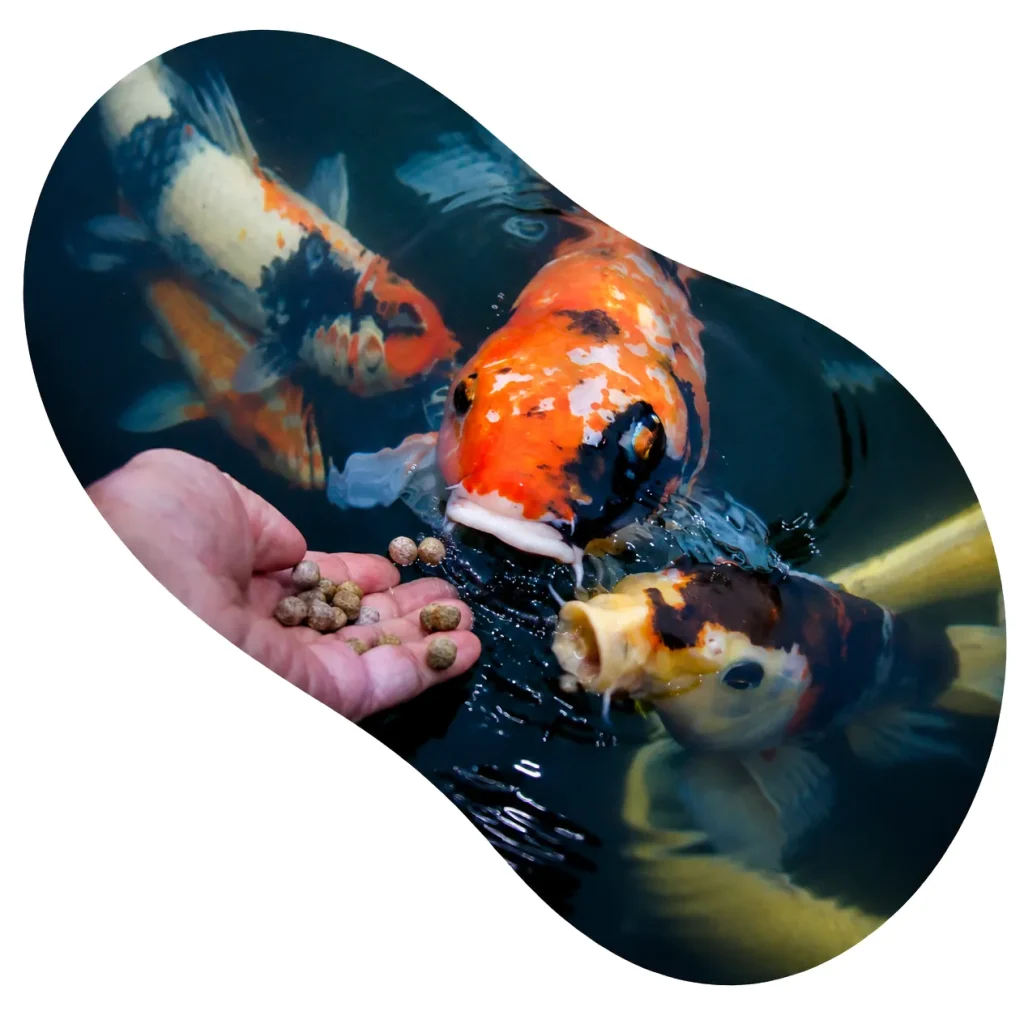
What is the best way to feed pond fish?

Good feeding is simple: the right food, small amounts, and a bit of watching.
  • Choose a food made for your type of fish. Koi and goldfish have slightly different needs, so check the label.
  • Feed only what your fish will eat in a few minutes, then stop.
  • Remove any uneaten food, because it breaks down and pollutes the water.
  • Mix up the diet now and then with a quality food, and occasional fresh treats such as peas.
  • Feed more lightly if the water is cloudy or the weather is very hot.
How often should you feed pond fish?
In spring, summer and early autumn, once or twice a day in small amounts suits most ponds. Feed less often as the water cools, and follow the guidance on your fish food packaging for temperature. Overfeeding is one of the most common causes of green water and poor water quality, so if in doubt, feed a little less.

How do you look after pond fish in winter?

Fish slow right down as the water cools, and their digestion slows with them. In cold water, food can sit undigested, so most owners cut back and then stop feeding when the water is properly cold and the fish are sluggish.
 
A few simple winter habits help:
  • Keep the pump and filter clear of fallen leaves before winter begins.
  • Net the pond in autumn so leaves do not rot in the water.
  • Make sure there is a gap in any ice for gas to escape, using a pond heater or floating ice preventer. Never smash ice, as the shock can harm fish.
  • Leave fish alone on very cold days and avoid disturbing them.

What size of pond and how many fish is right?

Overcrowding is a quiet cause of stress. More fish means more waste, less oxygen per fish and more work for your filter. Koi grow large and live for decades, so they need a generous, deep pond and strong filtration. Goldfish and shubunkins are hardy and suit smaller ponds. Rather than relying on a simple rule of thumb, think about how big the fish will grow, how well your filter copes, and whether the water stays clear and the fish stay active.
If you are unsure whether your pond is overstocked, send us a photo and we will give you honest advice.

How can you tell if a pond fish is sick?

Check your fish every day. Healthy fish swim freely, feed eagerly and have clear, undamaged fins and skin. Look out for:

[table id=5 /]

These are signs, not a diagnosis. First, test the water, because poor water quality causes many problems. If a fish still looks unwell, contact a fish vet for diagnosis and treatment. We can also check your pond’s water, filter and equipment so the cause is dealt with, not just the symptom.

How do filtration and cleaning protect your fish?

A good filter removes debris and houses the bacteria that keep ammonia down. Most ponds use a mix of three things:
  • Mechanical filtration catches leaves, debris and solids.
  • Biological filtration uses helpful bacteria to process waste.
  • UV clarifiers can help with green water caused by algae.
Check your pond weekly. Net out leaves, make sure the pump is moving water, and keep an eye on the water level. A sudden, unexplained drop can mean a leak. Top up with rainwater where you can, or use a suitable dechlorinator with tap water. How often your filter and pond need cleaning depends on the number of fish, nearby trees and the season, so it is worth asking for advice based on your own pond.

Which fish suit a garden pond?

Goldfish, shubunkins and koi are the most popular choices, and golden orfe are sometimes kept in larger ponds. Always match the fish to the size and depth of your pond, and think about how large they will grow rather than how big they are in the shop.

Frequently asked questions

How often should I feed my pond fish?
 
In spring, summer and early autumn, once or twice a day in small amounts is usual. Only give what they eat in a few minutes. Feed less as the water cools and stop when it is properly cold.
 
Do pond fish need feeding in winter?
 
Usually not. Fish become sluggish in cold water and digest food very slowly, so most pond owners reduce feeding in autumn and stop once the water is cold. Follow the guidance on your fish food packaging.
 
What water tests should I do for pond fish?
Test ammonia, nitrite and pH regularly, and nitrate too if your kit includes it. Ammonia and nitrite should not be detectable. Test more often after a clean, when adding fish or if your fish look unwell.
 
How can I tell if my pond fish are sick?
Look for white spots, ragged fins, odd swimming, gasping at the surface, hiding or refusing food. Test the water first, then speak to a fish vet or pond specialist.
 
Why are my pond fish gasping at the surface?
 
It is often a sign of low oxygen or poor water quality, especially in hot weather. Add surface movement with a fountain or air pump, test the water and ask for help if it carries on.
 
Can Aqua Pond help with my pond fish?
We look after ponds rather than build them, and we cover Bedfordshire, Hertfordshire and Buckinghamshire. If your fish are struggling or your water never seems right, we can look at the pond, filter and equipment.
 
We use Oase equipment and are proud to be Froglife Corporate Sponsors.

Need a hand with your pond?

If your water is cloudy, your fish are not themselves or you simply want a second opinion, Anthony is happy to talk it through. Call Anthony directly on 01525 552150, send a few photos by WhatsApp or email  info@aquapond.co.uk , and we will give you honest, practical advice.